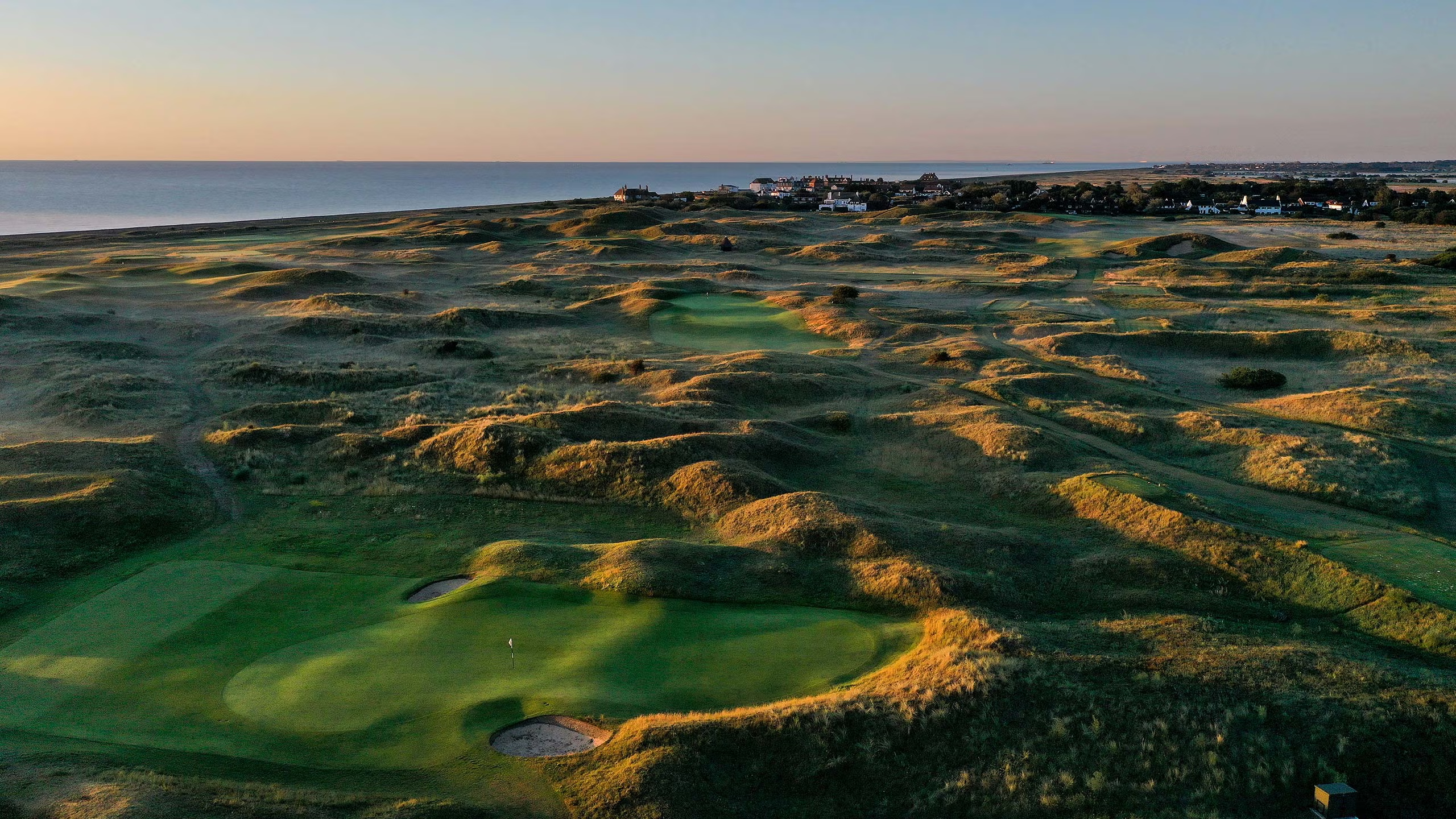
A giant of English links. Royal St George’s is wild, raw, and revered – home of The Open and golf’s great tests of nerve and skill.
Slope Rating
142
Par
70
Yardage
7,204
Royal St George’s is one of the most famous and fearsome links courses in the world. Located on the Kent coast near Sandwich Bay, it was the first English venue to host The Open Championship and remains a regular in the rota. Designed by Dr. Laidlaw Purves in 1887, it’s a true links – with rolling, uneven fairways, massive dunes, blind shots, and deep, ragged bunkers. The course is known for its unpredictability – a perfect strike can still get a cruel bounce. The front nine features the towering Himalaya bunker on the 4th, one of the biggest in championship golf. The back nine tests patience and control, with the 14th to 17th stretch among the toughest in the game. The par-3 16th is particularly brutal under pressure. Royal St George’s requires bravery, creativity, and humility. Tiger Woods lost a ball on the first hole in 2003. Darren Clarke won here in 2011. It’s a course that both tests and defines champions.
Course Stats
Designer
Dr. Laidlaw Purves
Opened
1887
Tee time availability
Difficult
Special information
Advance booking essential. Strict dress code. Proof of handicap often required. Caddies strongly recommended for first-time visitors.
Tiger’s best round
73 (2003 Open – lost ball on 1st)
Rory’s best round
70 (2021 Open)
Mens course record
64 – Collin Morikawa (2021 Open)
Ladies course record
—
Round duration
4 hours 45 minutes
Caddy guide
Strongly recommended – essential for navigating blind shots, uneven lies, and swirling wind
Buggies
Not permitted – walking only
Handicappers guide
A proper examination of links skill. Focus on trajectory control, landing zones, and strategic misses. Trust your caddy. The line is rarely where it seems.
Play safe lines and avoid trying to overpower the course. Score can unravel quickly – manage your game, avoid bunkers, and aim for the heart of greens.
Very challenging. Use forward tees and don’t chase score. Keep the ball low and in play. Experience the history, not just the golf.
Course Info
Green speed
10 – fast, firm, and linksy
Wind
A constant and defining factor – prevailing wind from the sea creates swirling conditions, especially on elevated tees
Pace of play
Well managed – elite-level marshals and structured tee times maintain flow
Nerves on the first tee
High – Open venue, narrow fairway, and legendary history make the opener unforgettable
Clubhouse
Elegant and deeply traditional – steeped in Open Championship history and private club charm
Signature holes
The 4th features the famous Himalaya bunker guarding a blind drive. The 6th is a brutal par-3 into the prevailing wind. The 14th is a long, bending par-5 with a fairway that ripples like waves. The 16th, a short par-3 with a tight green and gusty wind, can destroy scorecards.
Weather
Classic east coast links weather – drier than the west, but with consistent breeze. Summer brings hard-running fairways and golden light. Spring and autumn are playable but unpredictable. Always prepare for change.