
Machrihanish does not just ask how well you strike the ball. It asks how well you think.
From the first step onto the tee, it is apparent that there will be no refuge in habit. No shot may be played automatically. No swing is allowed to drift into carelessness. Every decision carries a consequence that will arrive not theatrically, but with quiet certainty.
There is a persistent fallacy attached to great courses that they can be captured by image or video.
Machrihanish resists that vanity. No drone footage, no photograph, no carefully edited film can come close to explaining what happens here. This is a course that exists in the mind long before it finishes on the scorecard.
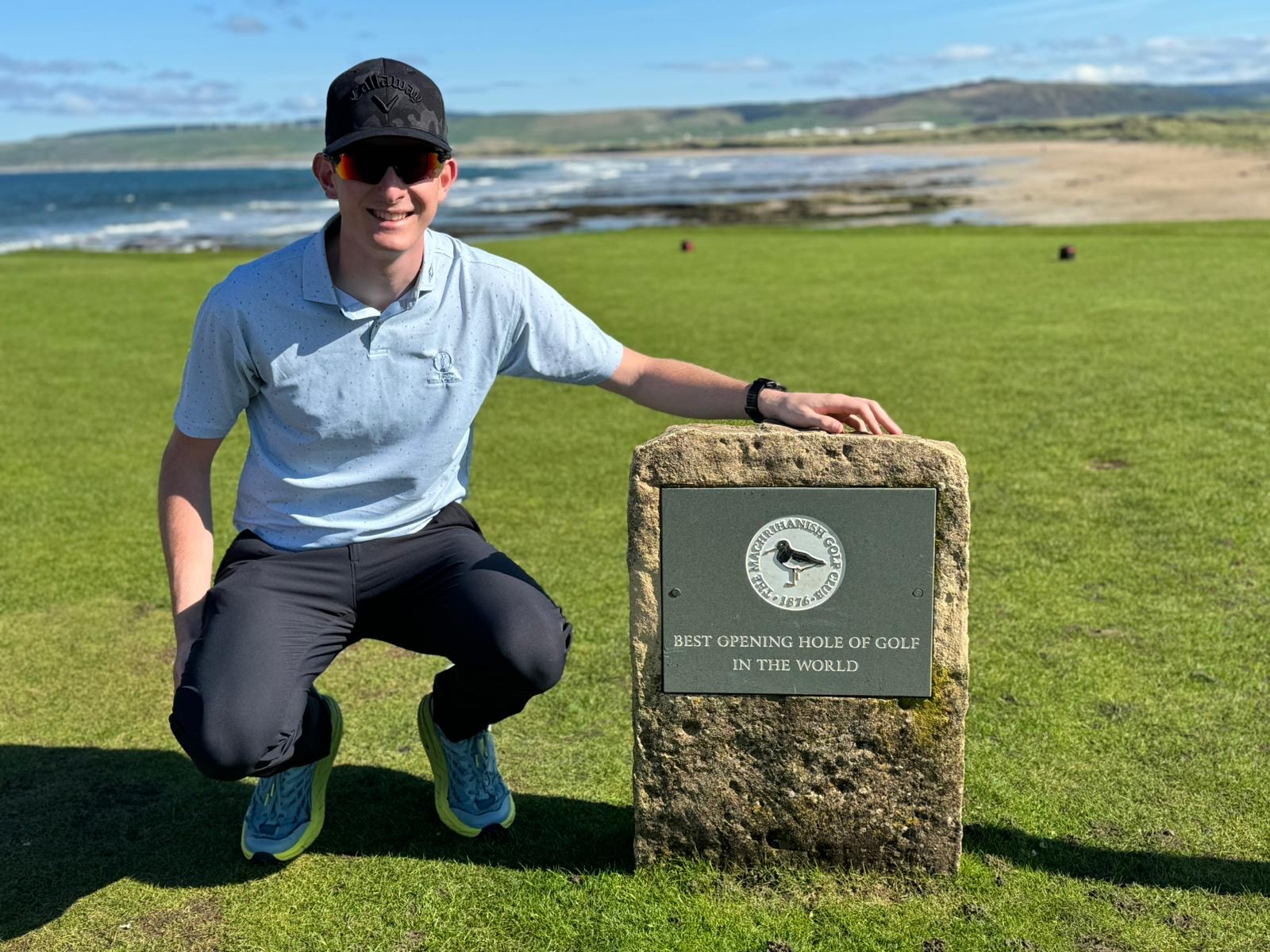
The first hole is spoken of often, usually in terms of beauty. That is an insufficient word. Beauty suggests comfort. This opening shot offers none.
You stand on the tee with the Atlantic pressed hard against your left shoulder and the weight of history under your feet. Pull the ball and you are not punished symbolically. You are punished physically, playing from sand that was never meant to forgive. Too bold and the carry is misjudged. Not bold enough and the crosswind takes its say, leaving you stranded on the beach, on the 18th fairway, or worse, beyond the boundary where the round is already bleeding.
Strike it well and you may still find trouble. Two pot bunkers lie in wait, indifferent to merit. Lay back and the reward is not safety but a long, uneasy second into a vast, undulating green that will not be hurried.
This is only the first shot.
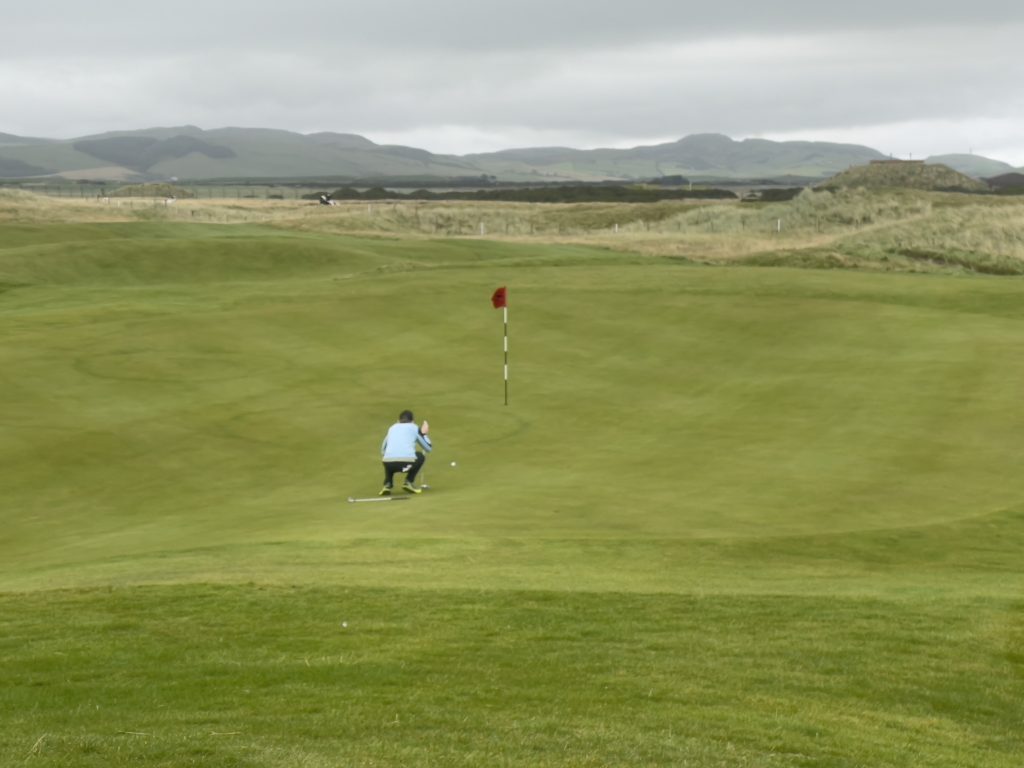
The second hole deepens the lesson. A lay-up that requires more thought than many approaches elsewhere. Too much ambition and the burn intervenes. Too little and the player is left with a blind approach into an elevated bowl green that reveals itself only at the last moment. Pull it and you are gone. Push or slice and the rough takes hold with a grip that feels personal.
Two holes played and the permutations already feel endless. There are dozens of ways to be wrong, and none of them feel unjust.
The third hole offers width, but no generosity. A blind drive over a saddle, then a green that slopes with deep intention, guarded by bunkers cut deeply enough to command respect rather than fear.
The fourth is ancient and severe. A par three of little length and great authority. The green is hard, unforgiving, almost architectural in its resistance. Precision is not encouraged. It is demanded. Miss short, miss long, drift right or left, and recovery becomes an examination of touch rather than technique.
At the fifth, angles rule. A right-angled par four where placement matters more than power. The approach is inviting only until it is not. Come up short and the gully opens. Go right and elevation becomes the enemy. Use the backstop wisely and the green will accept you. Misread it and it will not.
By the sixth there is a suggestion of mercy. With the wind behind, ambition is rewarded. It becomes drivable, the green expansive, the temptation real. But miscalculation is never forgiven. Rough waits on both sides, wild and unadorned.
Six holes played, and the mind already feels as though it has completed a round.
The seventh restores severity. A blind drive where position is everything, followed by an approach concealed by a dune that denies reassurance until the ball has flown. It is not brutal. It is exacting. A puzzle rather than a threat.

Machrihanish is often compared to other great tests. It is not a brute in the manner of Carnoustie. It is not expansive like the Old Course. It is more intricate than either. Complexity replaces intimidation. Thought replaces force.
All the while the land rises and falls, revealing Islay in the distance, the Paps of Jura holding the horizon. The scenery does not distract. It reminds you where you are.
By the ninth green there is a sense of completion rather than fatigue. The mind is full. The game has been engaging enough to make exhaustion irrelevant.
The tenth asks a new question. Can you thread a drive through a narrow valley and trust the ground to carry the ball forward? In crosswinds, the challenge sharpens. Precision is again the only currency.
The eleventh is ancient and formidable. A par three that has seen drivers taken without shame. The green is vast, the bunkers deep, the wind uncooperative.
The twelfth eases the tone briefly, offering two straightforward shots before demanding attention once more at a sloping green guarded by bunkers at the front and dunes all around.
The thirteenth appears kind until it reveals itself. A central fairway bunker divides intention. The green sits like a table, sloping decisively from front to back. Come up short and the ball refuses to climb. Go long and it is gone. Accuracy is the only answer.
By now the course is intellectually battering, though never cruel.

The fourteenth offers space and a moment to breathe, unless the wind is against you, in which case length becomes the challenge.
Then come two par threes that expose the game again. The greens are generous in size but utterly exposed. Wind cuts across them without apology. Long irons and fairway woods are pressed into service. Greens are rarely held. Patience is tested.
At seventeen, fatigue begins to whisper. The tee is elevated. Out of bounds stalks the left side relentlessly. In any wind, confidence is fragile. Play safe and the rough on the right guards the approach. Reachable becomes questionable. The green is fair, though its bunkers are cleverly hidden.
The eighteenth finally allows a measure of kindness. The drive is uncomplicated. The approach less so. A pronounced lip defends the green, which is flatter than expected and quietly receptive. A moment of grace at the end is earned.
I first played Machrihanish at twenty. My family came from nearby Campbeltown. There is attachment here, certainly. The views are fine. The people generous. The distilleries worthy. The clubhouse welcoming. The nearby Ugadale and cottages offer comfort.
But none of that explains the devotion.
I have not found a course that asks more intelligently. Ailsa comes close, but for a twelve-handicapper it is relentless. Machrihanish is different. It is exacting without being oppressive. Demanding without being unfair.
It is the perfect examination.
Not of skill alone, but of judgement.